An adjective is a word that describes a noun, so a comparative adjective is a word that describes a noun while also comparing it to something else. Comparative adjectives allow people to use proper English to describe two nouns as they relate to one another.
Adjective vs. Comparative Adjective
All adjectives function in the same way. Whether adjectives are a single syllable (like tall or short) or are longer words with multiple syllables (such as grandiose or effervescent), they all perform the same duty; they modify nouns. A comparative adjective modifies a noun while also making a comparison.
Type | Word | Example |
Adjective | angry | That person seems angry. |
Comparative Adjective | angrier | This man is angrier than that man. |
Comparative Adjective Examples
Use a comparative adjective any time you are looking for a way to describe the difference between two nouns (people, places, or objects). For example, use a comparative adjective to discuss how two different types of trees, such as an oak tree and a maple tree, compare to each other. The words taller and shorter can be used to both describe and compare the two trees.
- If you're a curious soul, you might wonder, "Which tree is taller than the other?" In this case, the word taller is a comparative adjective because it's comparing two nouns - the trees.
- The reply to the question posed above may also include the same comparative adjective. For example, a person might reply, "The oak tree is taller than the maple tree." Taller still functions as a comparative adjective in this sentence.
- To put it another way using a different comparative adjective, the response might be, "The maple tree is shorter than the oak tree." In this case, the word shorter is the comparative adjective.
Expand your ability to describe and compare multiple nouns by reviewing more examples of comparative adjectives.
Building a Comparative Adjective
A comparative adjective is similar to an ordinary adjective. Forming a comparative adjective typically requires adding a suffix or an additional word to an adjective. There are a few basic rules you’ll need to master.
Basic Comparative Adjective Rules
The key to constructing comparative adjectives lies with the number of syllables and the ending of the word. These two components will help you select the proper suffix to add for words that follow the basic rules.
- For an adjective with one syllable: Add the ending -er to the end of the adjective to create the comparative form. For example, tall becomes taller.
- For an adjective with two syllables that ends in -y: Drop the y and add -ier. For example, pretty becomes prettier and early becomes earlier.
- For an adjective with two syllables that does not end in -y: Add the word "more" before the adjective. For example, purple becomes more purple.
- For an adjective with three or more syllables: Use the word "more" before the adjective. For example, beautiful becomes more beautiful.
Once you get used to the rules for creating a comparative adjective from a regular adjective, you’ll be able to construct words to use for descriptive comparisons quickly and easily.
Special Rule: Doubling the Consonants
There is a special rule for building a comparative adjective from a word that ends with the pattern “consonant - vowel - consonant” (such as f-a-t).
- For words that follow this pattern, double the last consonant and add -er to the word.
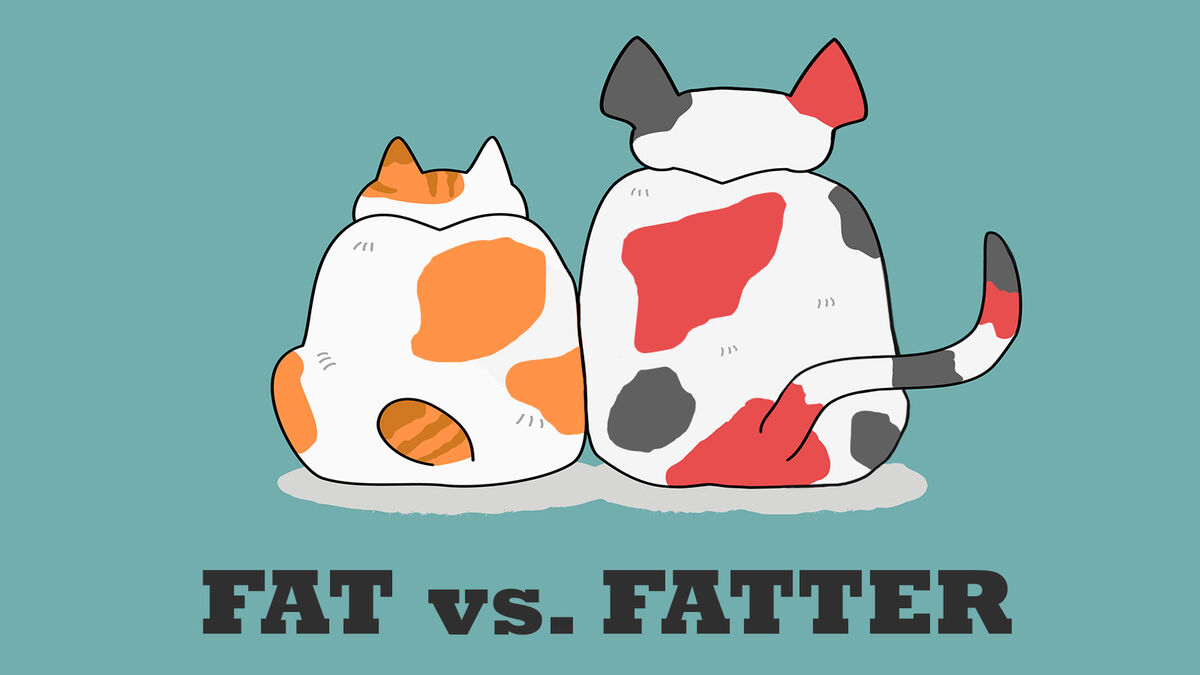
- This might sound confusing, but when you see it in action, it's actually quite simple. For example, big becomes bigger, fat becomes fatter, and thin becomes thinner.
Comparative Adjective Exceptions
While many words follow the basic rules of building a comparative adjective or the special rule described above, there are some exceptions, like both stupider and more stupid being acceptable. Examples include:
- Quiet does not end in y and has two syllables, but becomes quieter in the comparative adjective form.
- Far does not become farer when used as a comparative adjective, which would be the case when applying the rule for a single syllable word. Instead, far becomes father or further.
- Bad does not become badder. Instead, bad becomes worse when used in comparative adjective form.
- Good does not become gooder. Instead, the comparative adjective for is the word better.
Using Comparative Adjectives in a Sentence
When using comparative adjectives in a sentence, you should usually use the word "than" to structure your sentence. For example:
- Select the subject of the sentence (oak tree).
- Select the noun that has more of something than the other noun (oak tree).
- Select the verb that establishes the comparison (is).
- Then, place the comparative adjective (taller), followed by the word than.
- Finally, use the second noun (maple tree).
Sentence: "The oak tree is taller than the maple tree."
Moving on to Superlative Adjectives
Are you starting to get comfortable with comparative adjectives? Once you have mastered how to form and use comparative adjectives, turn your attention to learning about superlative adjectives. These words compare three or more nouns and usually use the -est suffix instead of -er, though, of course, there are some exceptions. Get started with a worksheet and lesson plan for both comparative and superlative adjectives, then grow your knowledge by learning several examples of superlative adjectives.