English grammar teachers love to teach lessons on conditional conjunctions because they serve such an important function in our writing. There are only a few different types of conjunctions in the English language, but we use them quite frequently in both the written and spoken word, often without considering the fact that they are conjunctions.
"If" is a commonly used conditional conjunction. In truth, it's easy to mistake it for an article. It's short and sweet, just like, "a," "an," and "the." Yet, conditional conjunctions serve a far more important role. Let's discuss how to spot them and how they work in everyday language.
What Are Conjunctions?
Before diving into conditional conjunctions, it's helpful to first review what a conjunction is. All conjunctions join words, phrases, and clauses together smoothly. "And" and "but" win the popularity contest for generic conjunctions. They are considered coordinating conjunctions.
Words such as these make it possible for two different ideas to hinge upon each other in one complete sentence. With conjunctions, we're able to write more complex and interesting ideas.
What Is a Conditional Conjunction?
Conditional conjunctions, in short, are used to describe a condition. It's really that simple. Common examples of conditional conjunctions include:
- Unless
- Since
- If
By using these conjunctions, we're showing that one clause in a sentence is dependent upon the other. We often use conditional conjunctions to describe hypothetical situations or to explain why something has happened,is currently happening, or will happen.
Ask yourself, am I trying to explain that something will happen on the condition that another thing will happen? If so, you'll probably use a conditional conjunction to express that idea in a sentence.
Conditional Conjunction Example Sentences
Here are a few sample sentences that use conditional conjunctions to join two ideas together.
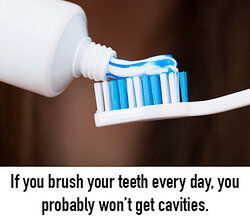
- If you brush your teeth every day, you probably won't get cavities.
- Unless you really need me to, I can't take the time to reorganize your desk today.
- Since I'll be out of town, I'm looking for someone to feed my cat.
In each of these sample sentences, the structure indicates that the second part of the sentence is a result of the first part of the sentence. Each clause containing the conditional conjunction is a dependent clause. That it, it cannot stand alone as a complete sentence. Meanwhile, the second half of each sentence is an independent clause and can stand alone as a complete thought.
In these examples that follow, the order is flipped such that the dependent clause with the conditional conjunction is in the second part of the sentence:
- Be sure to explore all your options if you really want to go in this direction.
- You cannot walk to school unless you take a friend.
- Let's skip the movie since we already know how it ends.
Subordinating Conjunctions
Conditional conjunctions are a type of subordinating conjunction. The primary purpose of a subordinate conjunction is to provide a transition between two ideas in a sentence. By nature, subordinate conjunctions allow readers to see that one idea is dependent upon another. This aligns with conditional conjunctions because they make it clear that, for one thing to happen, another thing must already be in place.
Using Conditional Conjunctions
The best way to get a handle on conditional conjunctions is to practice using them in sentences. Take a look at the following paragraph. Can you spot all of the conditional conjunctions? The answers are listed below..
Since it's spring, there are many flowers in the garden. You can pick one if you'd like! They smell so good because I take great care of them. Unless you lack the capacity to smell, you'll probably enjoy the way the roses smell. Once you fetch my scissors, I'll cut some for you to take home!
For a longer list of conditional conjunctions with sample sentences, check out Examples of Conditional Conjunctions.
Answers to practice paragraph:
since, if, because, unless, once
Conditional Sentences
Conditional sentences contain a conditional clause - also known as the "if" clause - and a consequence. In fact, "if" is the most common conditional conjunction used in conditional sentences. "If" one thing happens, then another thing will happen. For example, "If a garden is nurtured, then it will yield fruit."
Yet, not every conditional sentence needs to follow an "if + then" formula. We could express the same sentiment above by saying, "When your garden is nurtured, it will yield fruit" or "Your garden will yield fruit when it is nurtured."
There are four different types of conditional sentences. Each one expresses a varying level of probability that a particular situation is an absolute requirement for another to occur. For more on that, enjoy this article on Conditional Sentences.
Short, Staccato Sentences
The classic jingle "Conjunction Junction" was a masterpiece. We can hear it now: "Conjunction junction, what's your function? Hooking up words and phrases and clauses."
Without conjunctions, we'd be forced to write in short, staccato sentences. Now, our world is open to the possibility of compound sentences and truly unique, detailed thoughts. If you're planning to continue to explore the wonderful world of conjunctions, enjoy this article on Teaching Conjunctions. It'll help you lay it all out for your learners, one piece of the puzzle at a time.