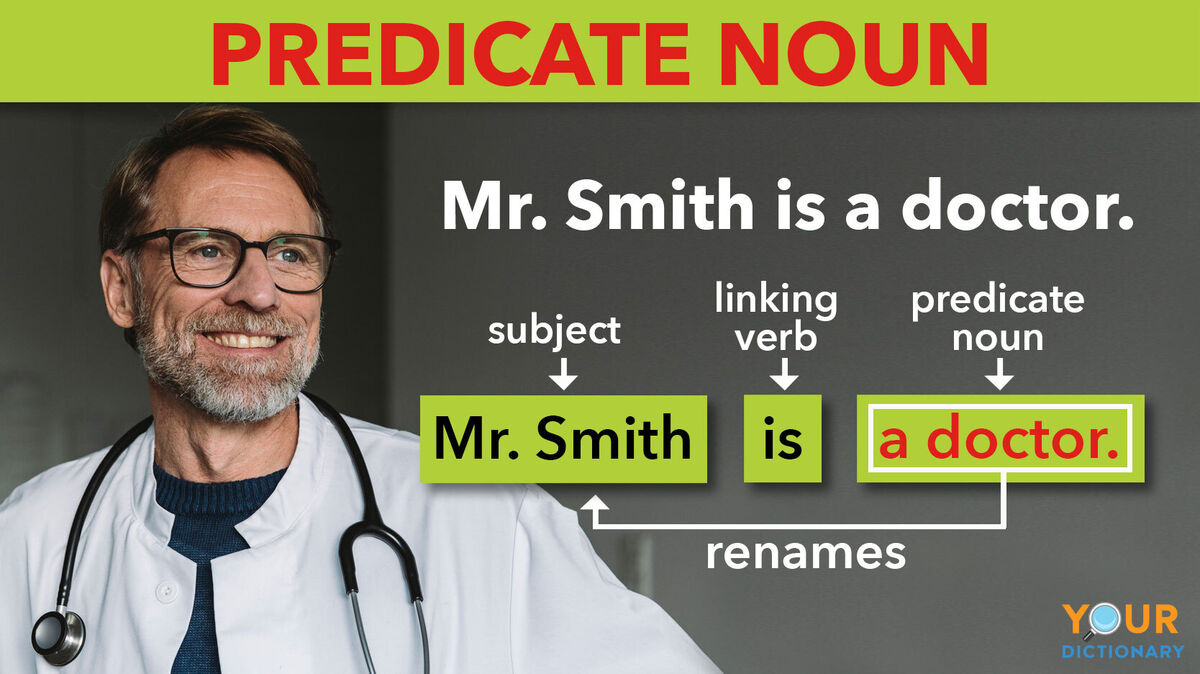
Do you know what a predicate noun is or how to use one? This type of noun enhances a sentence by providing clarification related to the noun that functions as the subject of the sentence. Learn more about what a predicate noun is and review some examples.
What Is a Predicate Noun?
A predicate noun is a single noun or a noun phrase that renames, further defines or explains the subject of a sentence. This type of noun always follows a form of the verb “to be” or another linking verb. A predicate noun is also called a predicate nominative.
Predicate Noun Functions
A predicate noun has two functions in a sentence:
- connector - A predicate noun functions as a connector because it connects to the subject of a sentence. It does this via a linking verb that is functioning as an intransitive verb.
- completer/complement - A predicate noun is also called a completer, or complement because it completes a linking verb used in a sentence as an intransitive verb. The sentence would be incomplete without the predicate noun.
Subject and Predicate
Every sentence has a subject and a predicate. The intransitive linking verb and the predicate noun make up the predicate of a sentence. The other noun is the subject of the sentence.
Verbs Used With Predicate Nouns
Only linking verbs can connect predicate nouns to subjects in sentences. There are many examples of linking verbs.
Forms of 'To Be'
Forms of the verb “to be” include:
is, was, am, are, be, being, been, has been, may be, were
Other Linking Verbs
Other verbs that may function as linking verbs include:
smell, taste, feel, sound, grow, seem, remain, became, become, continue, appear, turn, stay
Predicate Nouns in Sentences
To get a better idea of how predicate nouns function in sentences, review some examples of predicate nouns in sentences. In the sentences below, the linking verbs are underlined and the predicate nouns are bold.
- Mr. Smith is a doctor. (predicate noun)
- Lisa has been my friend for a long time. (predicate noun)
- My favorite hobby is kayaking. (gerund acting as a predicate noun)
- My son became a professional soccer player. (predicate noun phrase)
- J. K. Rowling is an excellent author. (predicate noun phrase)
- Wind turbines are an alternative source of power. (predicate noun phrase)
- My fondest dream is to take a Mediterranean cruise. (infinitive phrase acting as a predicate noun phrase)
Predicate Noun vs. Predicate Adjective
Since you now understand predicate nouns, you may be interested to learn a bit about predicate adjectives. Adjectives modify nouns, which includes describing them and giving more information about them such as, their composition, their origin, your opinion of them, and their purpose.
A predicate adjective is very similar to a predicate noun in that it completes the predicate and follows an intransitive verb. However, instead of renaming the subject, it modifies it. In the examples below, the intransitive verbs are underlined and the predicate adjectives are marked in bold.
- Antarctica is cold, barren and frozen.
- My recipe is French.
- The dancers were agile, energetic and beautiful.
- During the storm, driving became difficult.
- Her performance was phenomenal.
- She was sad, alone and miserable.
- We are underpaid.
Explore Other Types of Sentences
Sentences that include predicate nouns tend to be structured fairly simply. Now that you are familiar with predicate nouns, take the time to explore other sentence structures, including ones that include objects and are therefore more complex. Start by developing an understanding of subjects, predicates and objects. Then, learn more about the different parts of a sentence. Soon you'll be so comfortable writing compound sentences that you'll be ready to move on to even more advanced topics!