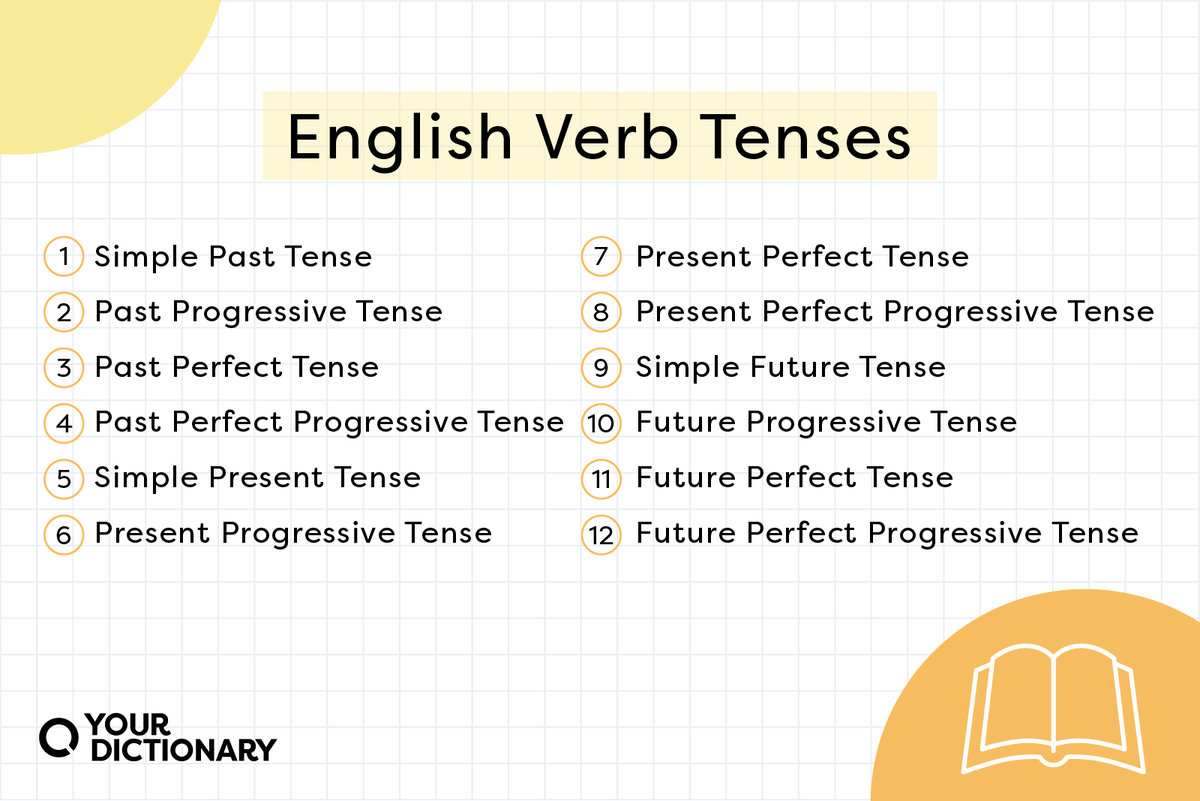
Actions can take place in the past, present, or future. So does that mean there are three verb tenses? Sort of. Each of those three verb tenses can take four different aspects — which means there are actually 12 verb tenses. That may sound overwhelming (who has time to memorize 12 verb tenses?!), but you probably use each of these verb tenses on a regular basis already.
What Is a Verb Tense?
A verb tense is the way you change a verb based on the time period when it happened (known as conjugation).
The three main verb tenses are past, present, and future.
| past tense | actions that happened before this moment | I visited my grandmother. |
| present tense | actions that are happening at this moment | I visit my grandmother. |
| future tense | actions that will happen after this moment | I will visit my grandmother. |
What Are Verb Aspects?
Verb aspects show the state of an action, including whether it is ongoing or completed. If you’d like to get more precise with your timing, you use one of the four aspects within each verb tense.
| simple aspect | simply expresses an action | I visit my grandmother. |
|---|---|---|
| progressive (or continuous) aspect | shows a current ongoing action | I am visiting my grandmother. |
| perfect aspect | shows a completed action | I have visited my grandmother. |
| perfect progressive aspect | shows an ongoing action that spans more than one time period | I have been visiting my grandmother. |
All of the above examples are in present tense (simple present, present progressive, present perfect, present perfect progressive). But you can also add these aspects to past and future tenses.
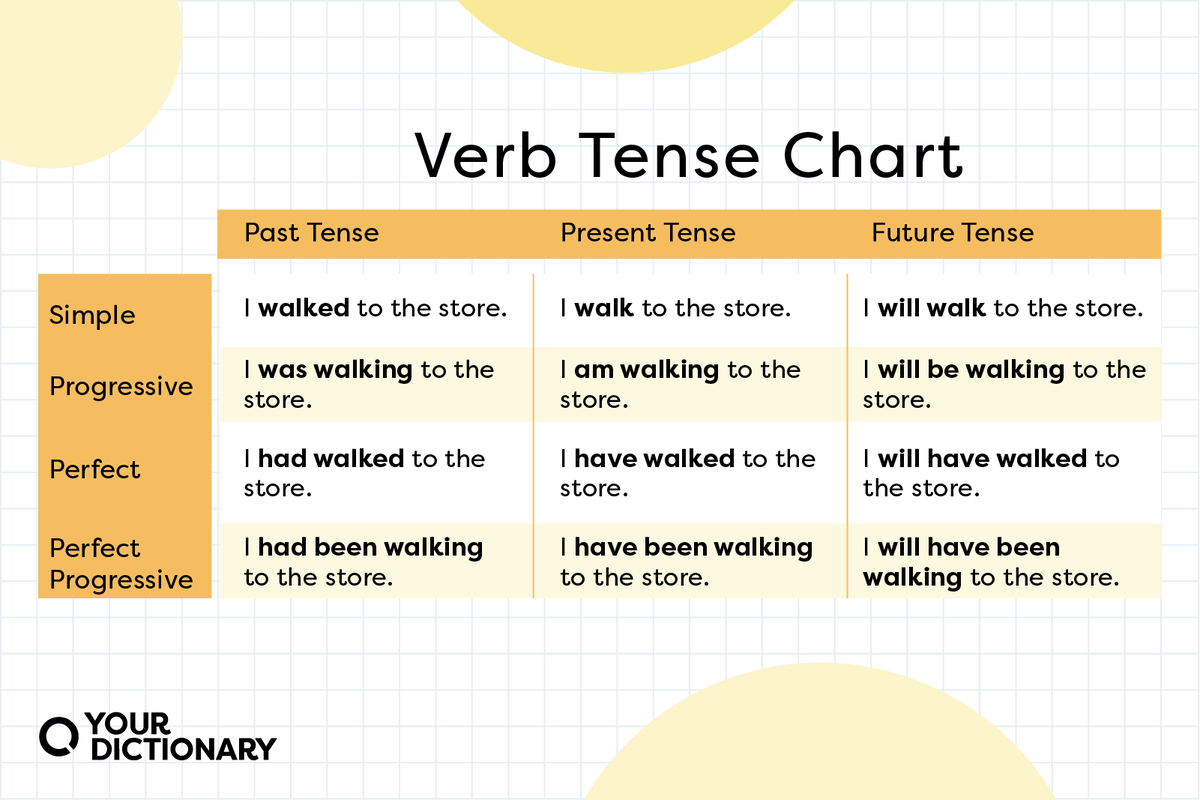
Past Tense Verb Tenses
When you use the past tense, you’re talking about an action that happened before this moment. It could have been yesterday, last week, or a hundred years ago — it’s all in the past.
Simple Past Tense
Simple past tense is the most basic form of past tense.
For regular verbs, add -ed or -d to the end of a verb (play becomes played, use becomes used).
For irregular verbs, you’ll need to change the word’s spelling in the past tense (hide becomes hid, see becomes saw).
- I walked to work yesterday.
- Jessica danced with her sisters.
- Nelson traveled to Mexico.
- My alarm rang at seven o’clock.
- Erin ate a candy bar.
Past Progressive Tense
Past progressive tense (also called past continuous tense) indicates that an ongoing action occurred in the past.
Form it with the helping verb was or were and the main verb’s present participle (ending in -ing).
- I was walking to work yesterday.
- Jessica was dancing with her sisters.
- Nelson was traveling to Mexico.
- My alarm was ringing at seven o’clock.
- Erin was eating a candy bar.
Past Perfect Tense
In past perfect tense, the action was completed before another action began. Use it by adding had to the main verb’s past participle.
- I had walked to work many times before.
- Jessica had danced with her sisters before the music stopped.
- Nelson had traveled to Mexico in 1999.
- My alarm had rung before eight o’clock.
- Erin had eaten a candy bar before dinner.
Past Perfect Progressive Tense
Past perfect progressive tense combines the progressive and perfect aspects to show an ongoing action that was completed before another action.
Use had been and the present participle form of the verb to form the past perfect progressive tense.
- I had been walking to work when I lost my phone.
- Jessica had been dancing with her sisters when she saw John walk in.
- Nelson had been traveling to Mexico when he heard the news.
- My alarm had been ringing for several minutes before I woke up.
- Erin had been eating a candy bar when she began to feel sick.
Present Tense Verb Tenses
Present tense shows that an action is happening right now, or that it happens constantly. Unlike the past tense, present tense verbs require subject-verb agreement (singular subject gets singular verbs, plural subjects get plural verbs).
Simple Present Tense
Simple present tense uses the basic form of a verb in the simple present, unless the subject is in the singular third person (he, she, it).
- I walk to work every day.
- Jessica dances with her sisters.
- Nelson travels to Mexico.
- My alarm rings at seven.
- Erin eats a candy bar.
Present Progressive Tense
Like past progressive tense, present progressive tense shows an ongoing action — but verbs in the present progressive tense are still ongoing in the present moment.
Add am, is, or are to the present participle of the main verb.
- I am walking to work.
- Jessica is dancing with her sisters.
- Nelson is traveling to Mexico.
- My alarm is ringing.
- Erin is eating a candy bar.
Present Perfect Tense
Verbs in present perfect tense show actions that started in the past and continue up to — or into — the present.
Use has or have with the past participle (yes, it’s still present perfect, even if you’re using the past participle).
- I have walked to work for 10 days in a row.
- Jessica has danced at every family wedding.
- Nelson has traveled to Mexico many times.
- My alarm has rung at seven o’clock every morning.
- Erin has eaten a candy bar after school every day.
Present Perfect Progressive Tense
Combine the perfect and progressive aspects in present perfect progressive tense, which shows ongoing actions that began in the past, continued in the present, and will still continue in the future.
Use has been or have been with the present participle of the main verb.
- I have been walking every day.
- Jessica has been dancing with her sisters for two hours.
- Nelson has been traveling to Mexico all afternoon.
- My alarm has been ringing since seven o’clock.
- Erin has been eating a candy bar while we’ve been talking.
Future Tense Verb Tenses
A future tense verb tells you an action that will take place at some point, but hasn’t happened yet. You can use the modal verb will in front of your verb, or you can use the verb phrase is going to.
Simple Future Tense
The simple future tense describes a single event that has yet to occur. Just add the verb will (or is/am/are going to) in front of the basic verb.
- I will walk to work tomorrow.
- Jessica will dance with her sisters.
- Nelson will travel to Mexico next week.
- My alarm will ring at seven o’clock.
- Erin is going to eat a candy bar tonight.
Future Progressive Tense
Future progressive tense shows an ongoing action that will occur in the future. Use will be and the present participle of the verb.
- I will be walking to work tomorrow.
- Jessica will be dancing with her sisters at the wedding.
- Nelson will be traveling to Mexico next week.
- My alarm will be ringing at seven o’clock.
- Erin is going to be eating a candy bar tonight.
Future Perfect Tense
Future perfect tense indicates that an action will be completed in the future before another action begins.
Form it with will have and the past participle form of the main verb.
- I will have walked to work by the time the meeting starts.
- Jessica will have danced with her sisters by the time the wedding ends.
- Nelson will have traveled to Mexico several times by his 50th birthday.
- My alarm will have rung before the sun comes up.
- Erin will have eaten a candy bar by the time dinner is ready.
Future Perfect Progressive Tense
The future perfect progressive tense suggests an ongoing action that will continue to some time in the future (usually indicated by context clues in the sentence).
Use will have been and the present participle form of the verb.
- After today, I will have been walking to work for 10 days straight.
- By the time the wedding ends, Jessica will have been dancing with her sisters for four hours.
- Nelson will have been traveling to Mexico for three days by the time he gets there.
- My alarm will have been ringing for several minutes by the time I finally hear it.
- By the time we finish talking, Erin will have been eating a candy bar for a half hour.
Don’t Let Verb Tenses Make You Feel Tense
Verb tenses direct the focus of the sentence and define the time in which something happened. This helps avoid confusion during communication.
If you're ready to test your tenses, see if you can master these verb tense worksheets and verb games.