Are your eyebrows on fleek? Do you even know what that means? Learning American street slang is vital to understanding the growth and evolution of the English language. Stay in the know by exploring slang in pop culture and fun regional slang words. You can also explore a few American slang dictionaries.
Slang Terms in Popular Culture
Slang is defined as a casual type of language that is playful or trendy. Funny American slang words consist of coined words and phrases and new or extended meanings attached to established terms. Examples of common slang within the United States include:
bail - to leave in a hurry
ballin' - wealthy lifestyle, making money
bet - sarcastic no
bruh - male friend, friend
cap/capping - tell a lie
chillin' - spending time with your friends
drip - extreme coolness, style
dope - very good, exciting
fire - excellent, attractive, exciting
GOAT - the greatest of all time, offers praise
ether - to embarrass or criticize someone
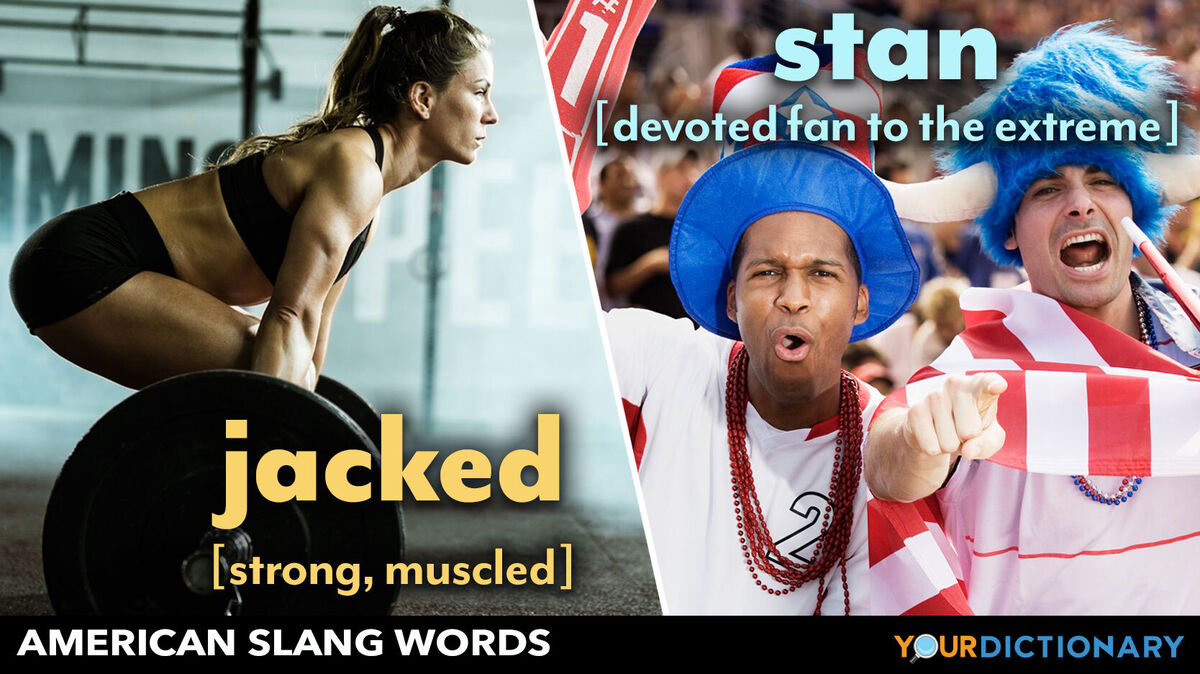
jacked - strong, muscled
juiced - to be very excited or eager to do something
lit - exciting, fresh
queen - positive female role model
rona/vid - COVID-19
rekt - beaten, destroyed, especially in an online game
shook - upset, shaken up
simp - people pleaser
slay - do something well or with confidence
stan - devoted fan to the extreme
swag - style, coolness
tea - truth, especially unexpected or disturbing truth
trashed - to be very drunk or to completely destroy someone's property
yeet - to throw or propel vigorously; also, an excited exclamation
wack - lame, lousy
zonked - completely exhausted, very tired
Since a number of slang terms make reference to sex, violence, drugs, or crime, the use of slang is often seen as an indicator of the speaker's lower social status. Nothing could be further from the truth! The use of slang has no correlation to the speaker's intelligence or grasp of the language. Indeed, creative use of slang can be a fun and enlightening component of anyone's vocabulary.
Popular Slang Phrases in America
Some American slang words become common phrases. Slang phrases tend to develop from the attempt to find fresh and vigorous, colorful, pungent, or humorous expressions. See a few common slang phrases used today.
ankle biter - a derogatory term for an infant or small child
Are you kiddin'? - said in frustration or surprise, hope it's not true
big mad - extremely angry
big yikes - elevated yikes, more intense
diamond hands - sticking it out in a situation with financial risk
For real! - speaking honestly and truthfully
go off - encourage a choice or rant
I'm dead! - dying from laughter
in a New York minute - to do something very fast
knocked up - a woman coping with an unplanned pregnancy, usually, someone who is either very young or unmarried
My bad! - acknowledging a mistake
Netflix and chill - making out, sex
on fleek - perfect, perfectly done
See ya! - goodbye, later
spilling the tea or spill the tea - gossiping
straight fire - that's hot, on the up and up
throw shade/throwing shade - do sneaky actions
What's good? - How are you?/ How's it going?
Regional Slang Words
Some slang words are commonly used across the country and appear in nationwide communication such as movies, television and magazines. But, some slang words have not gone mainstream and are used only in certain regions of the U.S. For example, here are a few regional slang words.
Word | Meaning | Example |
ayah (Maine) | used as a form of greeting | Ayah, how are you? |
bubbler (Wisconsin, Massachusetts and Rhode Island) | public drinking fountain | It was so hot in the park; there was a line at the bubbler. |
bufflehead (Pennsylvania) | mild insult calling someone foolish | You're dripping that cheesesteak all over my lap, ya buffleheaded goof! |
brick (New York) | cold | Layer up; it’s brick outside. |
cattywampus (South) | something out-of-whack, crooked | This road is cattywampus. |
clothes tree (Northeast) | piece of furniture with extended arms that stands against the wall for hanging clothes | Thought we had a break-in the other night, but it was just the cat knocking over the clothes tree. |
fixin’ to (South and Texas) | a quick way to say "will do that shortly" | I'm fixin' to go to the store. Y'all want anything? |
hella (Northern California) | a very casual slang word used as an adjective to describe something that is really good. | "Waves are hella good; it's a great day to surf." |
Jeezul Pete (Cincinnati) | minced oath for "Jesus Christ" | Jeezul Pete! What are you doing? |
no account (South) | Something (or someone) broken or worthless. Never used ironically, and a pretty nasty insult when directed at a person. It's more commonly used to describe objects. | You still got that no account Pinto? Naw, man, I got a rad Camaro up on blocks, but that engine just ain't no account. |
pitch-in-dinner (Indiana) | a function where everyone brings a dish to pass | Are you going to the pitch-in-dinner? |
punee (Hawaii) | small couch or daybed | It was too hot to ride bikes. We just napped all day on the punee. |
whoopensocker (Wisconsin) | uniquely Midwestern way to say something is wonderful | Her rhubarb pie was a real whoopensocker. |
wicked (New England) | used for emphasis, the same way you would use "really” | These lobsters are wicked good. |
y’all (South and Texas) | a shorthand way to say “you all” to address a group of people | Do y'all want to go to the fair? |
American Slang Dictionaries Online
Since slang is constantly changing, it can be difficult to find definitions of certain terms in a printed dictionary. Luckily, many websites are offering rich collections of funny American slang words.
- Dave's ESL Cafe has a short guide to American slang designed to assist those learning English as a second language.
- Dictionary of American Regional English (DARE) breaks the U.S. into multiple regions and subregions. It only includes words that are used regionally. Audio clips are included for many words, allowing you to hear the regional slang word being said.
- ManyThings has a list of more than 280 American slang definitions sorted alphabetically. Example sentences are provided with each term to make it easier to understand the correct usage.
- Urban Dictionary is a large website that allows users to submit their own definitions for various slang terms. While the quality of the information can sometimes be questionable, this site is often the best resource for learning more about obscure slang usage.
- Slang City, although not a dictionary in the traditional sense, is another great resource for anyone interested in learning more about American street slang. This entertaining website features articles, illustrated topical guides to various types of slang and interactive games such as the "Random Insult Generator."
Using American Slang
Slang is informal speech, and therefore, should be avoided in formal writing, such as business correspondence, academic projects and essays. Slang is also not jargon, which is terminology associated with a particular profession or pastime.
Outside a formal or professional setting, slang is a vital part of American English. Screenwriters and novelists often draw on the power of slang in their craft, and it's a rare conversation between Americans that doesn't feature at least some funny American street slang. For more context, explore the history of American slang words. Happy learning!