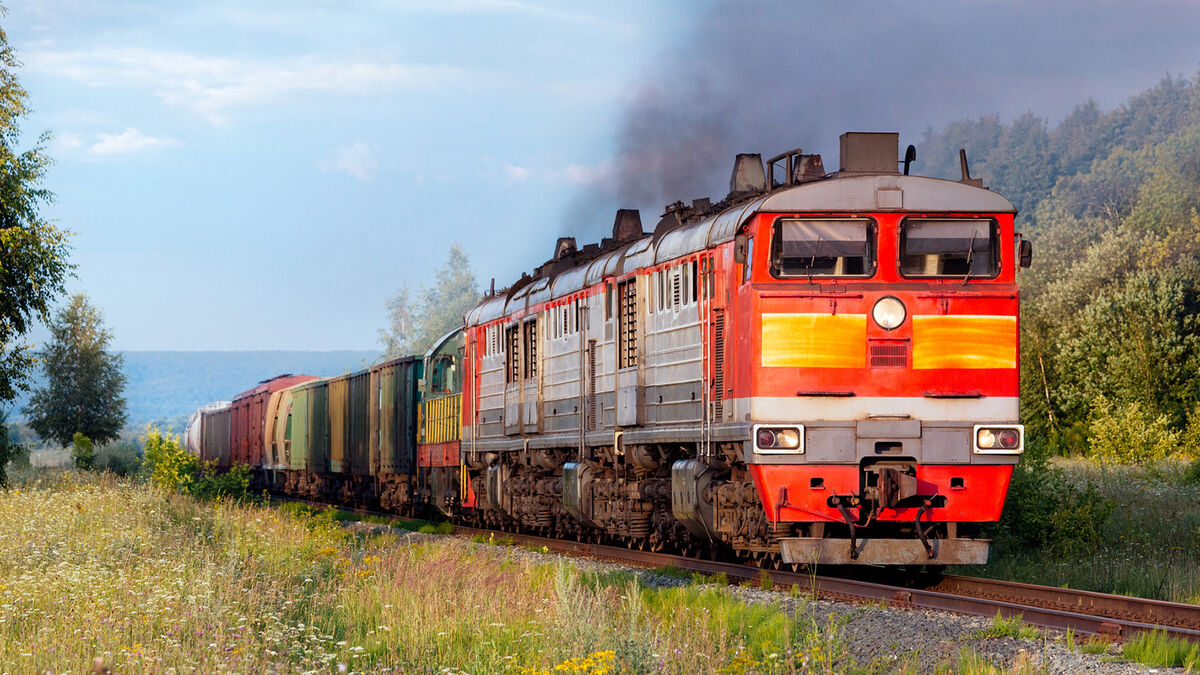
Are you interested in seeing a glossary of railroad slang? Some train lingo is widely known, but chances are that you’ll be surprised by several of these railroad terms unless you work in the industry. Discover slang and jargon used to describe railroad equipment along with a variety of general terms related to trains, rail yards and the people who work on them.
Railroad Equipment Terms and Slang
Find out what terminology rail industry insiders use for various pieces of railroad and train equipment.
- all black - signals an "all clear," meaning there are no defects that can be seen against the black running gear
- anti-climber - safety feature to preserve the structural integrity of a train in the event of a a crash
- blue flag - a blue flag, sign or light that indicates a train car is being worked on
- coupler - device that locks cars and locomotives together; also known as the knuckle-coupler
- engine - term used for any kind of locomotive
- EOT device - acronym for end of train; device that monitors a train’s air brakes (also known as FRED - flashing rear end devices)
- flange - small lip on the inside of rail wheels that guides and keeps the locomotive or car on the track
- goat - slang for yard engines
- piggyback - truck (big rig) trailers that are being transported
- sperry car - car used by Sperry Rail Services to look for defects in the rail
- varnish - refers to passenger cars and equipment; originally referred to the wooden passenger cars that had glossy varnish on them
- yard goat - a switch engine
- yaw dampers - springs that reduce the rocking motion of an engine or car
General Railroad Terms and Lingo
Get to know the lingo of railroad professionals by mastering the official terms and slang for a variety of general railroad terms.
- bake a cake - building up steam
- battleship - a very large locomotive
- brass collar - an official representative of the railroad; a bigwig
- clown wagon - the caboose of a train
- COFC - acronym for containers on flatcar; means that the train is hauling shipping containers
- cog railroad - railway that travels on steep grades; has a toothed rack rail positioned between the rails of a cogwheel located beneath the locomotive
- crossbuck - the X-shaped sign where the tracks cross a road
- derail - what occurs when the train leaves the tracks
- double heading - when there are two locomotives moving a train
- double-stack - stacking one cargo container on top of another
- drag - slang for slow freight
- eighth notch - the final notch in the throttle; the most powerful position
- fusee - a flare
- highball - signal to operate a train at full speed
- hotshot - freight train given priority; it is almost never held up and is usually given the main line
- in the hole - the siding where a train waits for another to pass
- meet - when one train passes another and one is in the siding
- night owl - a passenger train that operates late in the evening
- on the ground - term for a derailed train
- pickup - adding cars to a train
- power - another name for a locomotive
- rolling stock - all of a particular company’s train cars and locomotives
- run 8 - running at notch 8 or full power
- shuffle - switching train cars around
- stack train - slang for a train that has containers stacked two deep on each car
- tin can - a tank car (such as one that would haul milk)
- TOFC - acronym for trailer-on-flatcar; term for hauling highway truck trailers on a train
- zombie - slang for reusing a locomotive's frame and trucks (wheel-axle-frame assembly)
Railroad Personnel Terminology and Slang
Railroad jobs tend to have very interesting names. Discover slang words and job titles for some of the most interesting positions held by people who work on trains or in rail yards.
- ash cat - fireman for the locomotive
- baby lifter - brake operator on a passenger train
- boilerman - ensures the train’s boiler is operating properly while the train is underway
- conductor - responsible for the train, its crew and cargo
- engineer - person responsible for operating the engine
- gandy dancer - slang term for old-time railroad maintenance workers; members of crews who did manual upkeep on certain sections of train tracks
- hog head - slang for train engineer
- hogger - slang for train engineer
- hostier - slang for train engineer
- roadmaster - responsible for railroad track maintenance
- switchman - works at intersections operating switches that alter a train’s direction
- trainmaster - oversees train crew; responsible for train safety
Language of the Railroad Industry
The railroad remains an important part of the supply chain, and likely will for decades or centuries to come. From the start of the railroad in 1815 through deregulation in 1980 and to the present, the railroad industry has always been surrounded by lore and legend, so it shouldn’t be surprising to find out that jargon and slang terms have developed specific to this industry. Discover more about jargon in the workplace.