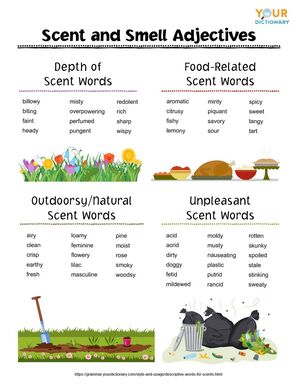

Isn't it amazing how words can take shape and materialize into depictions of real-world encounters, including scents? The more descriptive the word, the greater the chance that the imagination will recreate the scent. That's why it's vital for writers to have a few descriptive words for scents ready to go. You never know when you'll want to share the memory of a fine day, right down to the jasmine wafting through the air. Use these smell adjectives to enhance the sensory appeal of your writing.
Describing a Scent
Some descriptive words for scents refer to what made the smell or explain what it smells like. Review words and meanings here or download a printable list of scent words.
Outdoorsy or Natural Adjectives for Smell
The great outdoors is filled with fragrances that most people can relate to, so nature words are often used to describe or explain scent.
- airy - natural smelling, like clean, fresh air
- clean - very light scent, clean and natural
- crisp - fresh and natural
- earthy - recently dug or tilled soil
- fresh - natural smelling, rather than artificial
- loamy - fragrance with an earthy note
- feminine - floral fragrances
- floral - scents associated with flowers
- flowery - fragrance similar to flowers
- masculine - earthy fragrances
- pine - crisp, refreshing evergreen smell
- lilac - rich floral scent combining rose with vanilla
- moist - smell of dew or rainfall
- rose - spicy yet sweet fragrance
- smoky - scent of burning wood
- woodsy - forest-like smell
Food-Related Words to Describe Smell
There can be a close association between the senses of taste and smell, so it makes sense that fragrances are often described in terms of foods.
- citrusy - crisp notes of any citrus fruit
- fishy - smelling of fish; pungent, strong, unpleasant
- lemony - tart, piquant citrus notes
- lime - refreshing and zesty citrus smell
- minty - menthol-like smell, think mint tea or peppermint candy
- savory - spicy, salty scent that has no elements of sweetness
- spicy - sharp, heady, can sting or tickle the nose
- sour - rancid, sickly sweet smell
- sweet - sugary smell
- tart - sharp fragrance
Adjectives to Describe the Depth of Scent
Some scents are very light while others are extremely strong with a lot of variation in between.
- billowy - scent that surges and wanes
- biting - pungent, sharp or harsh fragrance
- faint - very light or mild fragrance; can barely be detected
- heady - very strong aroma
- misty - mild fragrance, not overpowering
- overpowering - too strong of a smell
- pungent - strong fragrance
- redolent - having a strong, permeating odor
- rich - a strong, resounding smell that is appealing to the senses
- sharp - pungent fragrance that permeates the air
- wispy - hint of fragrance in the air
- perfumed - artificial fragrance, not natural-smelling
Advertisement
Descriptive Terms for Unpleasant Scents
Simply saying that something smells bad isn’t very descriptive. Use appropriate adjectives to convey what an unpleasant odor smells like.
- acid - sour, burnt odor; vinegary smell
- acrid - strong, biting smell, such as something that’s on fire
- dirty - nasty, unpleasant odor; unwashed and in need of washing
- doggy - odor like an unbathed or wet canine
- fetid - decaying or rotting smell
- mildewed - soaked in wetness that has gone stale
- moldy - damp, fungus-like odor
- musty - old smell; stale and probably moldy
- nauseating - odor that makes one sick to one’s stomach
- plastic - artificial chemical polymer odor
- putrid - stench of decay
- rancid - spoiled; food that has gone bad
- repulsive - off-putting odor
- rotten - spoiled, rancid, unpalatable
- skunky - noxious smell that lingers; sulfuric (like rotten eggs) odor
- stale - old, dusty, stagnant odor
- spoiled - rotten; something that has “gone bad”
- stinking - unpleasant, foul smell
- sweaty - perspiration odor
Advertisement
Scent Synonyms
The word scent can refer to a lovely perfume or a strong odor. There are many synonyms you can use instead to avoid repetition. While each of these words can be used to mean the same thing as scent in certain contexts, the associated connotation can be quite different. You might talk about how much you love the aroma of freshly baked bread, but it wouldn't make much sense to talk about the pheromone of freshly baked bread.
- aroma - strong, yet pleasant scent
- aura - smell surrounding something
- balm - soothing scent
- bouquet - blend of floral scents
- essence - basic, natural scent
- fragrance - pleasant smell
- incense - strong scent
- odorize - changing the scent
- perfume - added scent
- pheromone - natural scents
- smell - odor, smell, scent
- trace - a tiny amount of fragrance
- whiff - a fleeting scent
If you're looking for antonyms of the word "scent" instead, you could use such words as stench, stink or reek. These have much more of a negative connotation to them, like how you might talk about the stench of a dumpster in a back alley.
Advertisement
Descriptive Words Set the Mood
It is said that a person’s sense of smell may be the strongest link to memories, even more than sight or hearing. Indeed, scents can bring back the past or can set the mood for new experiences. Take a second to stop and smell the flowers with fun sunflower facts.
With a few poetic lines, a reader can visualize precisely how an author was feeling, down to the very smell in the room. It’s only natural to incorporate adjectives for smell into writing and dialogue. As you continue to create interesting scenes within your writing, utilize this list of descriptive words to help engage readers in your stories. Get ready to bring entire universes to life with your words.