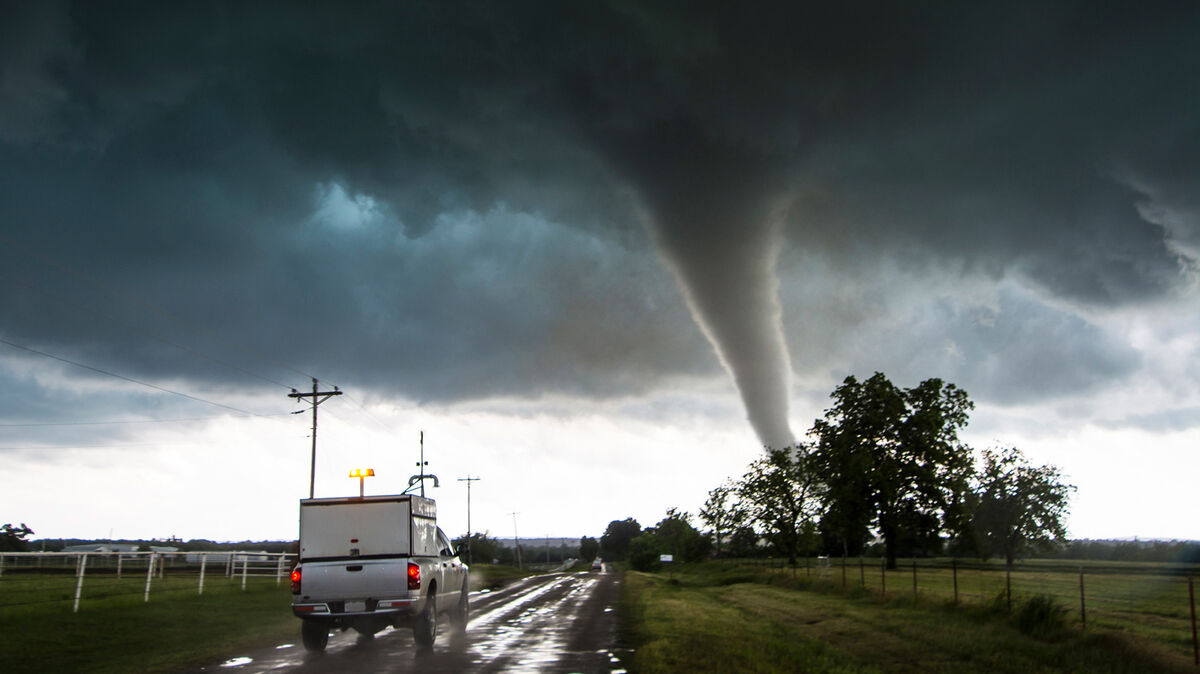
Are you interested in writing about the weather and looking for words to describe a tornado? Tornadoes are rotating columns of air that make contact with the surface of the Earth. They can range in strength from damaging trees to leveling houses and deforming skyscrapers. Tornadoes come in many forms and are often mistaken for other natural phenomena.
Types of Tornadoes
The word tornado is a broad term to describe a certain kind of common weather event that can be very dangerous. Most tornadoes are over quickly, leaving behind a wake of destruction and contrastingly serene weather after they pass. There are several different types of tornados.
- cone tornado - the classic tornado shape; wide at the top and narrowing toward the bottom, similar in appearance to an upside-down pyramid
- landspout - rotation that forms over land when there are no thunderstorms in the area; doesn’t last long
- multiple vortex tornado - when two or more air columns make contact with the ground, rotating around each other.
- rope tornado - relatively small tornado with a rope-like appearance; most tornadoes start this way before growing in size
- satellite tornado - a multiple vortex tornado that is surrounded by additional rope tornadoes
waterspout - a tornado over water; can develop even when there are no thunderstorms
- fair weather waterspout - has relatively weak winds and smooth laminar wall
- tornadic waterspout - very powerful waterspout; often associated with severe thunderstorm
- wedge tornado - very wide cone tornado; covers a huge area due to its massive width
Fujita Tornado Damage Scale
Tornadoes are some of the most destructive natural phenomena on Earth. There are many ratings for the intensity of a tornado, but the most famous one is the Enhanced Fujita Tornado Damage Scale. No list of vocabulary words for tornados would be complete without mentioning this scale. It is based on how much damage a tornado can cause to man-made structures and vegetation. The scale was created by Ted Fujita in 1971 at the University of Chicago and was updated to the Enhanced Fujita Scale in 2007.
- EF0 tornado - winds 65-85 mph; causes minor damage to tree branches and little to no damage to man-made structures
- EF1 tornado - winds 85-110 mph; causes moderate damage and can peel roofs off of houses or knock over automobiles
- EF2 tornado - winds 111-135 mph; causes considerable damage and can uproot trees and knock over mobile homes
- EF3 tornado - winds 136-165 mph; causes critical damage and can tear roofs and walls off of houses, overturn trains, uproot forests, and twist and deform skyscrapers
- EF4 tornado - winds 166-200 mph; causes severe damage and can level well-constructed houses, throw cars and other large objects, as well as destroy skyscrapers and highrises
- EF5 tornado - winds 200-plus mph; causes devastating damage and can lift an entire house into the air and disintegrate it as well as throw a car nearly 100 meters; in the movie Twister an EF5 tornado was referred to as "the finger of God"
More Tornado Vocabulary Words
Tornadoes aren’t described only in terms of their type and Fujita level. Build your science vocabulary by learning other words related to tornadoes.
- long track tornado - tornado (any type) that stays on the ground for 25 miles or more (very rare)
- radar indicated tornado - weather radar indicates a rotation believed to be a tornado; not yet confirmed through being spotted by a person
- swath - the area on the ground damaged by a tornado
- tornado path - the path a tornado traveled on the ground
- tornado shelter - public space to which people can evacuate; on-property shelters, such as basements, cellars or special structures constructed for protection against extreme weather conditions
- tornado siren- tornado warning system available in some areas; sounds an alarm if a tornado is believed to be nearby
- tornado warning - a tornado has been spotted in the area or is indicated on radar
- tornado watch - conditions are favorable for tornadoes to develop
- touch down - indicates that a tornado has made contact with the ground
Adjectives to Describe Tornadoes
Sometimes when you’re writing about a tornado, what you are really looking for are the best adjectives to describe its appearance or effects. There are many ways to describe a tornado, both in terms of how they sound or look, as well as their incredible power and the destruction they leave behind.
- beautiful
- compact
- glowing (sky)
- greenish (hue)
- dark
- deadly
- devastating
- eerie
- eerily beautiful
- enormous
- fast-moving
- ferocious
- fierce
- funnel-shaped
- huge
- loud (sound like a freight train)
- massive
- powerful
- short-lived
- small
- stunning
- vicious
- terrifying
Words Used to Describe a Tornado in Movies
Even people who don’t live in areas where tornadoes are a threat have likely seen them depicted in movies. Tornadoes are described using a few different words in some popular movies.
Cyclone in The Wizard of Oz
In the famous 1939 film The Wizard of Oz, the main character Dorothy is knocked unconscious by a tornado and wakes in the magical Land of Oz. The movie referred to the tornado as a cyclone multiple times leading to the word cyclone becoming a layman's term for a tornado. The enduring popularity of the movie has led to the term cyclone still being used today as a tornado word. The real definition of cyclone usually involves an area of fluid motion rotating in the same direction as the earth.
Twister in the Movie Twister
Like The Wizard of Oz, the movie Twister also popularized a new term for a tornado. The movie was released in 1996 and went on to become the first Hollywood film to be featured on the DVD format. Today, the term twister is synonymous with the word tornado due to the movie's immense popularity.
Spanish Origin of the Word Tornado
The word tornado is thought to come from the Spanish word tronada which means thunderstorm. The word tronada comes from the Latin word tonare, which means to thunder. The modern word most likely comes from a combination of the Spanish words tronada and tornar which means to turn. Now that you’ve learned the link between the Spanish language and the word tornado, familiarize yourself with more vocabulary words for weather in Spanish.
Develop Your Science Expertise
Learning about tornadoes is a great way to build your knowledge of weather and science. If you’re interested in continuing to learn more about the natural world and want to continue building your science-related vocabulary, explore vocabulary terms for sound and light.