William Shakespeare (1564-1616) was not only a prolific writer, he is said to have introduced over one thousand words and phrases into the English language. While research suggests that Shakespeare might not have invented all those words and phrases, his works are likely the first time the terms were written down. This does not discount the fact that Shakespeare was a master of the English language. Explore several examples of phrases and words Shakespeare invented (mostly).
Words That Shakespeare Invented
Here are some words we still commonly use that first appeared in Shakespeare's plays, along with the meaning and an example sentence:
- admirable - something that deserves respect or admiration
Being honest is an admirable quality. - auspicious - favorable; promising success; a good omen
A wedding is an auspicious occasion. - baseless - without a foundation; not based on fact
If you accuse someone of wrongdoing, make sure you have evidence and it is not a baseless accusation. - barefaced - shameless; without concealment or disguise
When someone tells a barefaced lie, it is not a very good one, and you immediately know it is not true. - belongings - a person’s moveable possessions
She packed her personal belongings in her bag to leave. - castigate - to punish harshly
Sometimes celebrities and politicians are castigated in the press more harshly than ordinary citizens. - clangor - a loud (clanging) sound
Ghosts are sometimes said to be followed by the loud clangor of chains. - dawn - the beginning appearance of light when the sun rises
Many people like to sit and watch the coming of the new dawn. - dexterously - skillful, especially in the use of one's hands (or also one's mind)
A good carpenter can dexterously build a bookshelf very easily. - dwindle - to get smaller; diminish; often used to describe money
Many people's savings dwindle after losing a job. - hostile - an unfriendly person or demeanor
A neighbor that fights with you over a tree might be considered hostile. - ill-used - to treat someone badly
The man was ill-used at his work. - long-legged - to have long legs
The long-legged girl had trouble sitting in the back seat. - lonely - to be alone
The woman was lonely in the house without her beloved dog. - multitudinous - a lot; a great number
You are in luck if you can say that you have a multitudinous amount of friends. - ode - a lyrical poem
If a boy likes a girl, he might sing her an ode, especially in movies. - overblown - pretentious or outrageous
Your teenager might have overblown dreams of success and glory. - sanctimonious - pretending to be very religious or righteous
Sometimes people who judge others harshly are sanctimonious. - skim milk - milk where the fat is removed
You might use skim milk with your cereal. - watchdog - a person or group that keeps a close watch to discover wrong or illegal activity
The watchdog group PETA exposes wrongful actions against animals.
Phrases Shakespeare Invented
Shakespeare didn't just increase the number of new words in the dictionary, he also coined some colloquial phrases. Many of these famous quotes are sure to be familiar.
- "All that glisters is not gold." (Merchant of Venice)
We usually use this phrase after we discover that something that looks good turns out not to be that great, and substitute "glitters" for "glisters." - “As good luck would have it” (The Merry Wives of Windsor)
This means something happened to you that was pure chance or luck. - "Break the ice" (The Taming of the Shrew)
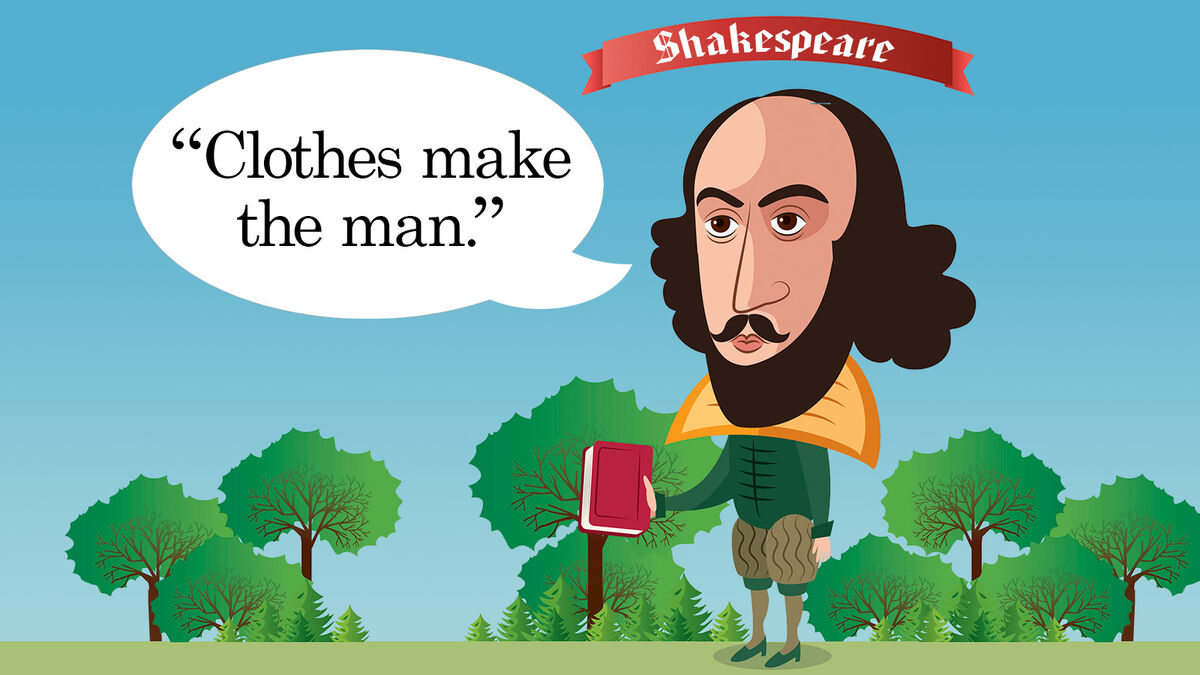
Often when you meet someone for the first time, you "break the ice" by asking them polite questions about themselves. - "Clothes make the man." (Hamlet)
Although not always true, this phrase implies that how a person dresses tells you something about who they are as a person. - “Cold comfort” (King John)
It’s a form of consolidation, but it is a bad consolidation since the whole situation is bad like dropping the inflation rate for millions of unemployed would be a “cold comfort.” - “Come what come may” ("come what may") (Macbeth)
Whatever is going to happen is going to happen. You are accepting that fact. - “Devil incarnate” (Titus Andronicus)
This describes someone that is evil and scheming like a reincarnation of the devil. - “Eaten me out of house and home” (2 Henry IV)
You might hear parents say this about teenagers a lot. They’ve eaten so much that all the food is gone.
- "Fair play" (The Tempest)
Follow the rules, especially in competitions or sports.
- "A laughing stock" (The Merry Wives of Windsor)
To be a laughing stock is to be considered a joke by many people.
- "In a pickle" (The Tempest)
To be "in a pickle" is to be in trouble or in a situation that you cannot easily get out of. - "It's Greek to me" (Julius Caesar)
When you say, "it's Greek to me," you are admitting that you do not know or understand something. - “Pound of flesh” (The Merchant of Venice)
When this phrase is used it is talking about a cruel or unusual punishment. - “Such stuff as dreams are made on” (The Tempest)
Describes when something is so good that it is just like a dream. - "The lady doth protest too much" (Hamlet)
If someone denies something more than once, you can say "the lady doth protest too much," meaning you think that they feel the opposite of what they are saying. - "Too much of a good thing" (As You Like It)
It is said that "too much of a good thing" (i.e. money, love, food) is not necessarily good for you. - "Wear one's heart on one's sleeve" (Othello)
To be a hopeless romantic (or be open and honest about how you feel) is to wear one's heart on one's sleeve. - “Wild-goose chase” (Romeo and Juliet)
When someone leads you on a wild chase to find them, it is commonly known as a wild-goose chase. - “What's done is done” (Macbeth)
It is done, and there is no going back. You must simply deal with the consequences.
Additional Resources
If you want to learn more about Shakespeare, here are some great resources:
- Folger Shakespeare Library is a comprehensive resource about Shakespeare's works and his life.
- MIT has an online version of the complete works of Shakespeare
- The Kennedy Center has a lesson plan that can be used to teach a class about Shakespearean words.
Shakespeare the Inventor
While Shakespeare might not have been the creator of all the different words he's credited with, he was the first one to write them down and made them stick in our everyday language.
You can learn even more about Shakespearean words by trying a Shakespeare translator. You can also peruse his biography. When it comes to Shakespeare, you can’t have “too much of a good thing.”